
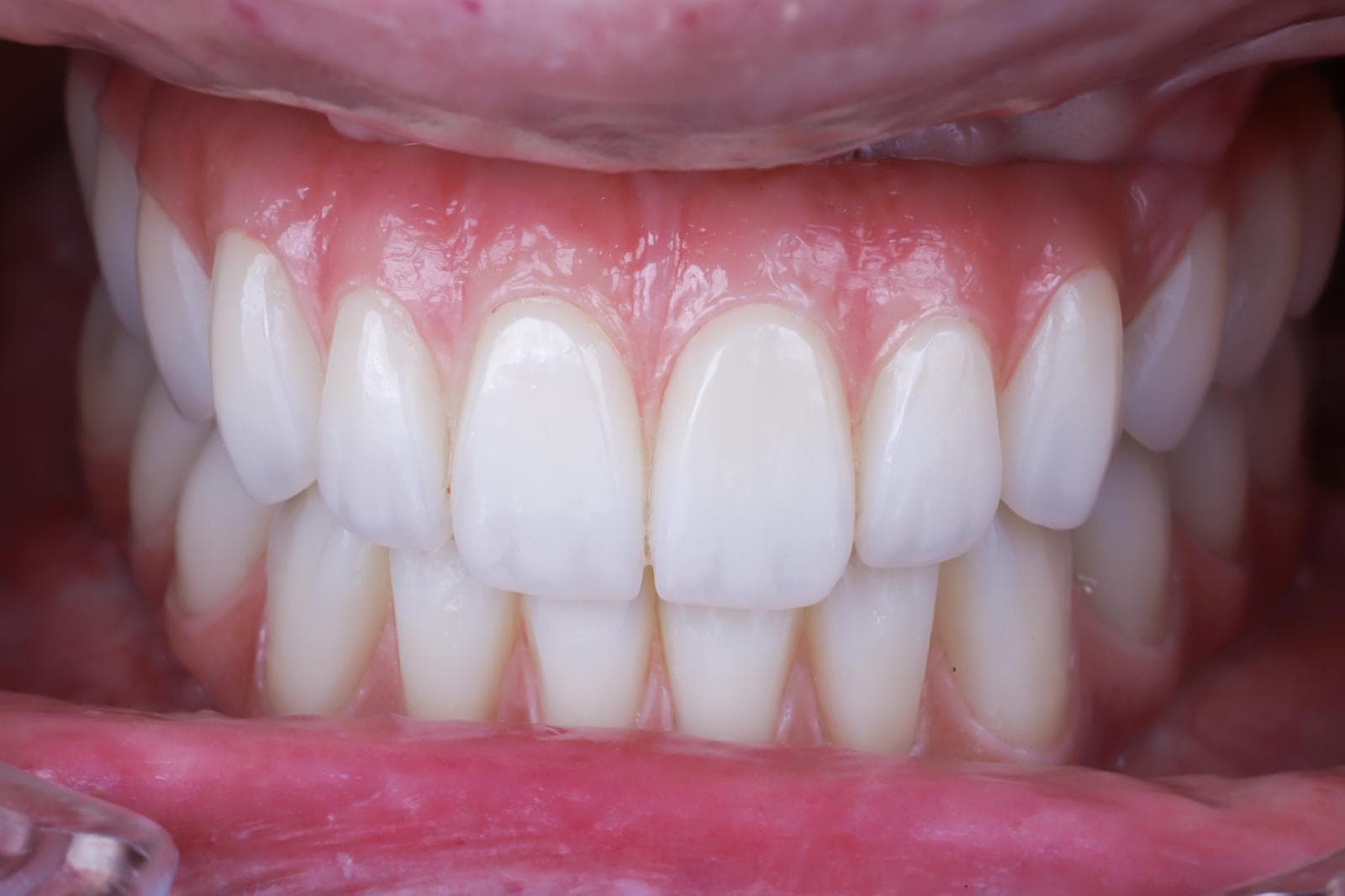
Transnasal Implants
What are transnasal implants?
Transnasal implants are a type of dental implant for patients without bone — extraoral anchorage implants placed through the upper jaw bone and fixed in deep bone structures near the nasal cavity.
Unlike traditional implants placed directly in alveolar bone, transnasal implants use denser, more stable anatomical zones, allowing implant placement even with extreme bone resorption.
It is an advanced surgical technique for cases where bone grafts, maxillary sinus lifts, or complex regenerations are not possible.
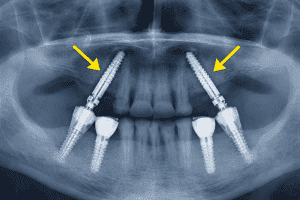
What is the transnasal implant technique?
The transnasal implant technique is a minimally invasive surgical procedure that places long implants through the maxillary bone to reach deep anchorage zones with high bone density.
This technique avoids:
- Bone grafts
- Sinus lifts
- Complex regenerations
- Multiple surgeries
Using immediate loading, it allows immediate rehabilitation with fixed teeth the same day as surgery.
Who are transnasal implants indicated for?
Transnasal implants are especially indicated for:
- Severe bone atrophy in the upper jaw.
- Extreme maxillary sinus pneumatization.
- Previous failure of conventional implants.
- Rejection or impossibility of bone grafts.
- Total or partial tooth loss in the upper jaw.
- Need for immediate fixed rehabilitation.
They are a safe, predictable alternative when conventional techniques are no longer viable.
What is a nasal or transmucosal implant?
A nasal implant is a long anchorage implant fixed in deep areas of the upper jaw, passing through bone structures near the nasal cavity. It uses basal bone that does not resorb over time, ensuring excellent primary stability. Transnasal implants belong to the cortical anchorage family, like zygomatic or pterygoid implants.
A transmucosal implant passes through the mucosa without large surgical flaps, allowing less inflammation, less bleeding, faster recovery, and less post-operative pain.
When are transmucosal implants used?
They are mainly used in:
- Immediate loading implantology
- Cortical anchorage implants (zygomatic, pterygoid, transnasal)
- Patients with little bone
- Minimally invasive advanced surgery
Transnasal implant placement process
At MAG Dental Madrid we follow a precise clinical protocol to ensure maximum safety and treatment success.
Advanced study and diagnosis
3D CBCT scan, anatomical structure study, evaluation of maxillary sinuses and nasal cavity, and digital implant planning.
Treatment design
Selection of implant type and length, virtual surgical positioning, and immediate prosthesis design.
Placement surgery
Minimally invasive procedure, often transmucosal, with anchorage in deep basal bone.
Immediate loading
Placement of provisional fixed prosthesis within 24 hours.
Definitive prosthesis
After osseointegration (3–4 months), placement of the definitive prosthesis.
Difference between transnasal and conventional implants
| Feature | Transnasal | Conventional |
|---|---|---|
| Anchorage type | Deep basal bone | Alveolar bone |
| Bone grafts needed | No | Often when little bone |
| Immediate loading | Common | Not always possible |
| Surgeries required | Single | Several in complex cases |
| Indicated with little bone | Yes | No |
Results and durability
Transnasal implants show very high success rates when correctly placed in well-selected patients. Recent clinical studies show high osseointegration rates, long-term stability, excellent chewing function, and very satisfactory aesthetics.
The basal bone where they anchor does not resorb over time, providing superior durability in complex cases.
Advantages of transnasal implants
- Allows implants even without maxillary bone.
- Anchored in deep basal bone that does not resorb.
- Avoids bone grafts and reduces number of surgeries.
- Immediate loading: fixed teeth in 24–48 hours.
- High primary stability.
- Faster, more comfortable recovery.
Disadvantages and limitations
- Requires a highly specialized surgeon.
- Not indicated for all patients.
- Requires advanced 3D digital planning.
- Technically more complex than conventional implants.
Price of transnasal implants
The price depends on case complexity, number of implants, prosthesis type, and immediate or delayed loading.
Indicative prices
- Single transnasal implant: from €2,500
- Full rehabilitation with transnasal implants: from €12,000 – €18,000
Each case requires a personalized assessment for a fixed, adapted quote.
What are the side effects of dental implants?
Like any surgical procedure, dental implants may have mild, temporary side effects:
- Moderate inflammation
- Post-operative discomfort
- Minor bleeding
- Pressure sensation in the treated area
With transnasal implants, these effects are often even milder due to the minimally invasive technique. Complications are uncommon when performed by an experienced specialist.
Transnasal implant opinions
Patient opinions often highlight:
- Fast recovery.
- Elimination of fear of bone grafts.
- Comfort from day one.
- Security of having fixed teeth immediately.
- High functional and aesthetic satisfaction.
For many patients, this technique has been the only real possibility of having fixed teeth again.
Book your appointment today and recover your smile with guaranteed results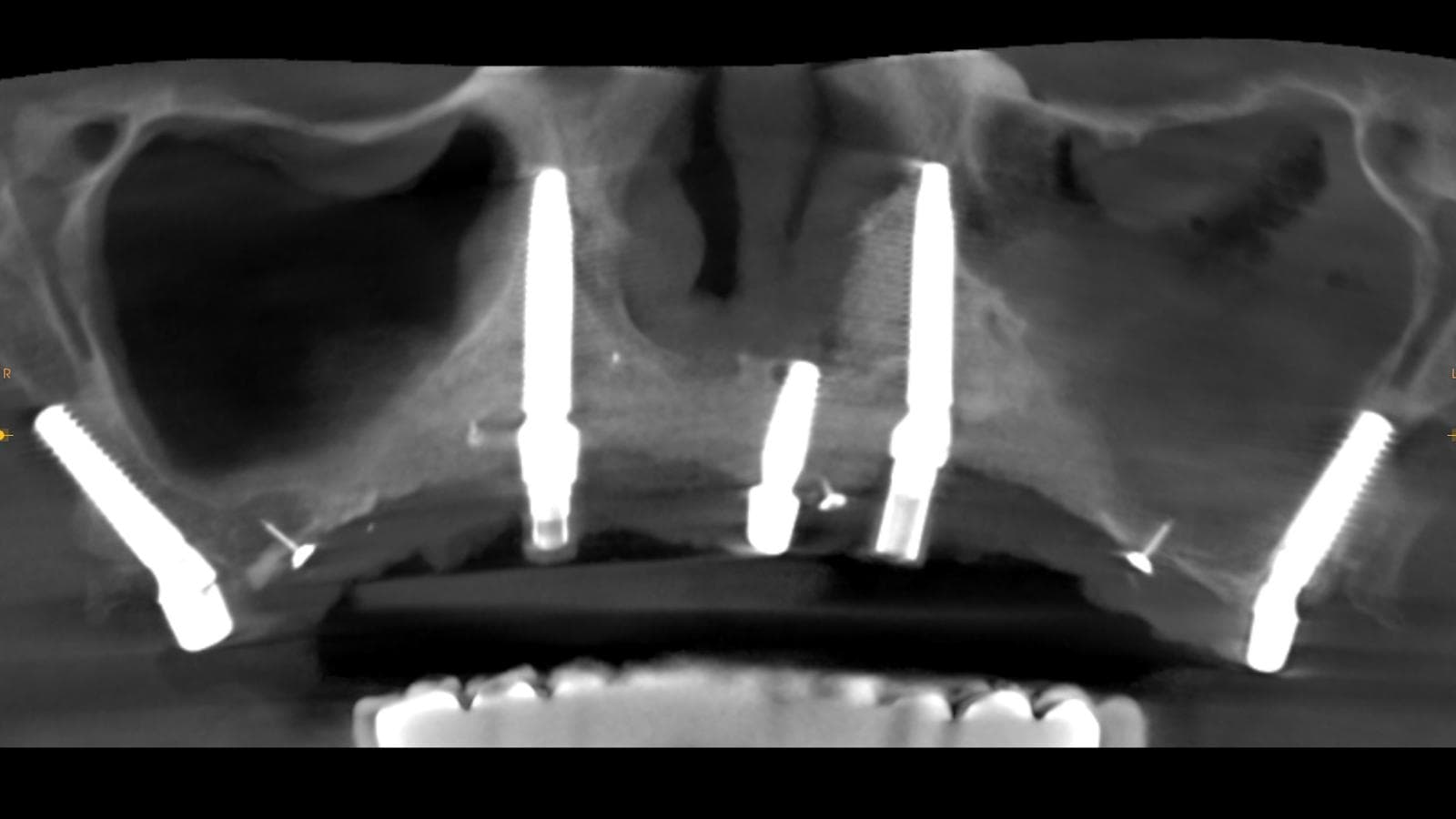
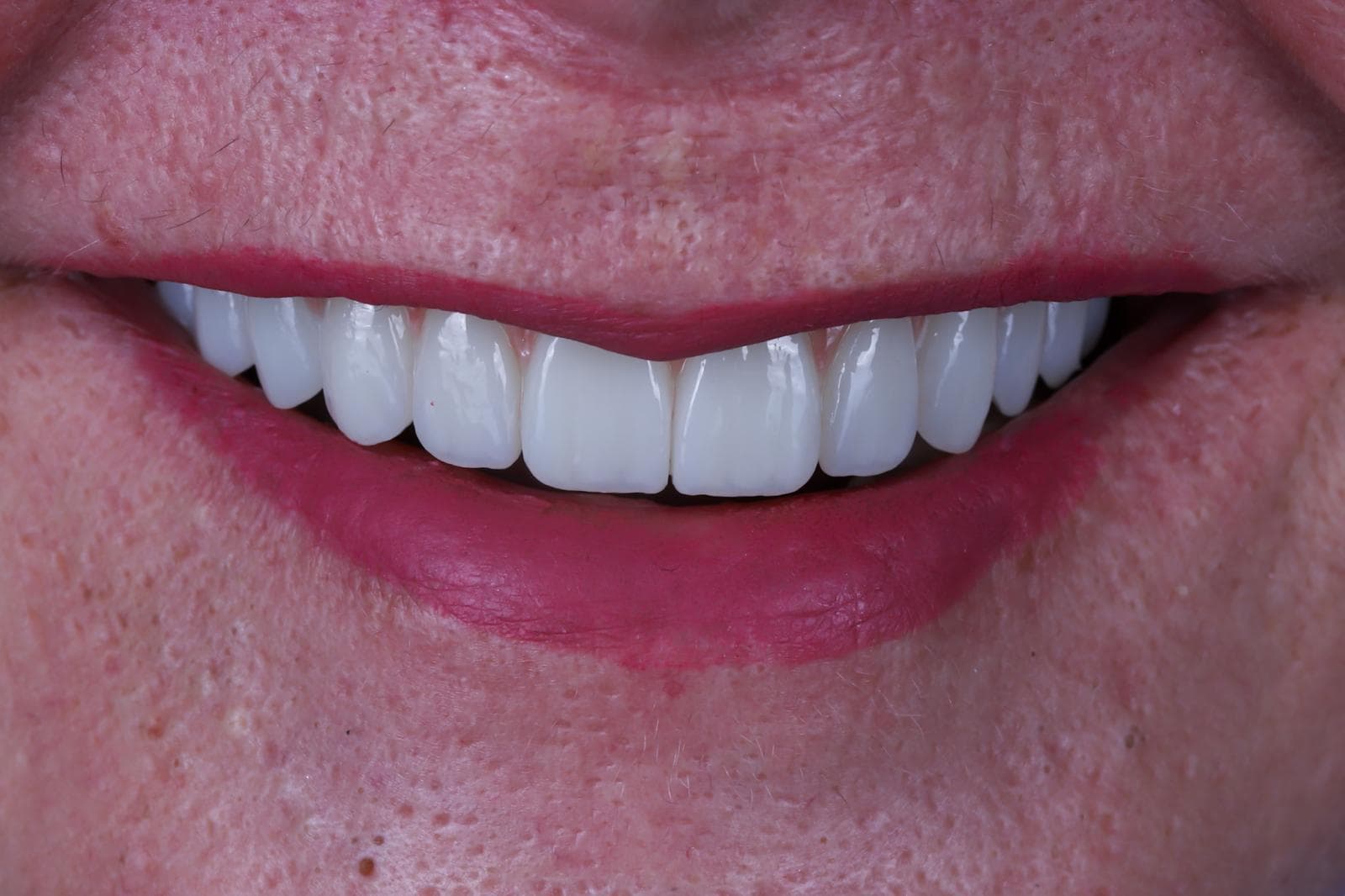
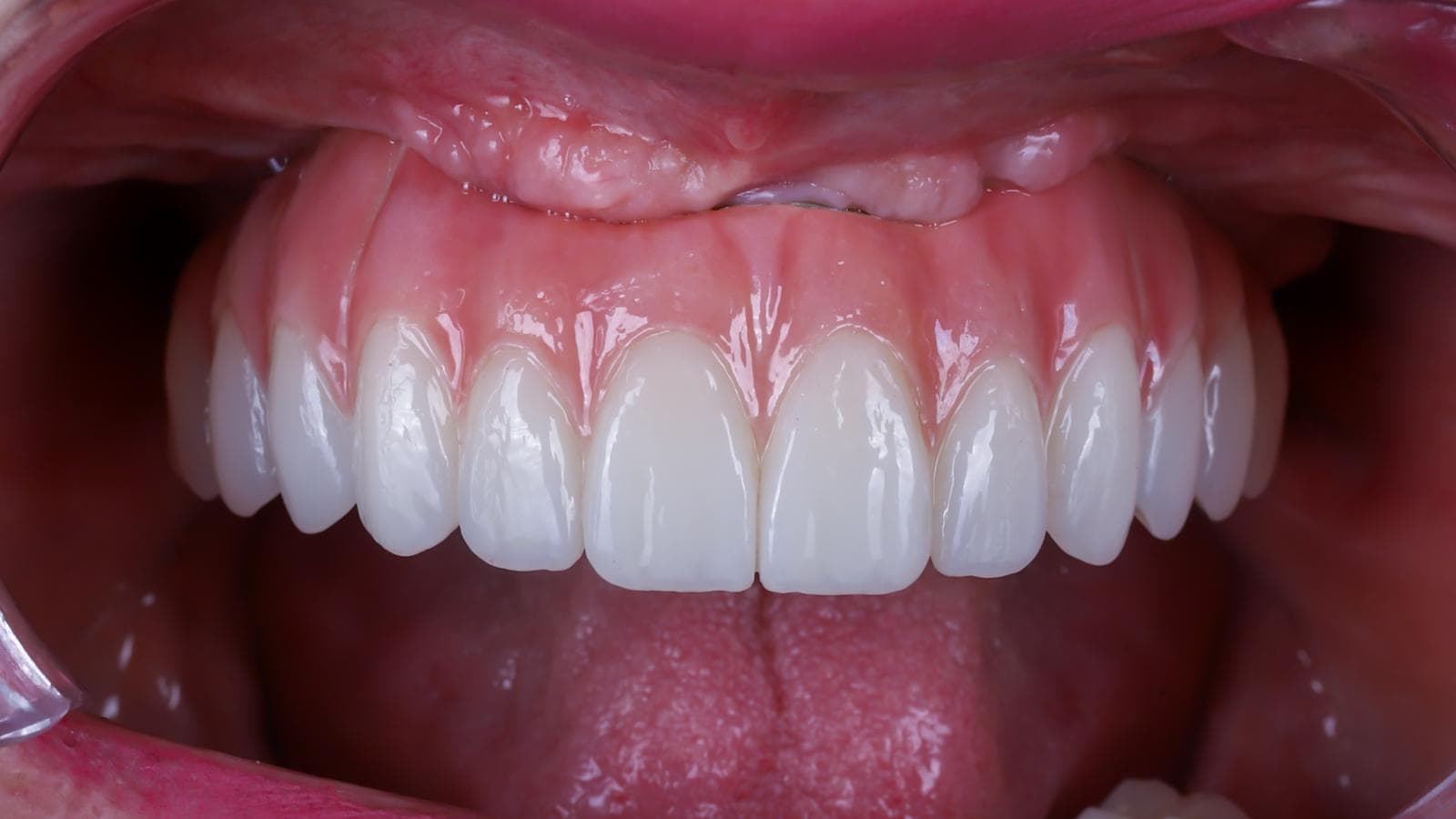
“We have solved hundreds of complex cases for patients with insufficient bone for dental implants. We will study your case to give you the safest solution — we offer a lifetime warranty on dental implants.”

Meet the team
MAG Dental Madrid
Multidisciplinary team
At MAG Dental Madrid we have a multidisciplinary team specializing in dental implants, fixed dentures on implants with immediate loading, and high-aesthetic dental veneers.
The team is led by Dr. Alejandro Prieto, an internationally renowned implant surgeon, expert in full-mouth implants and high-aesthetic dental results. We have an exclusive dental laboratory, allowing us to control every phase internally for quality, precision, and predictable outcomes.
Our goal: natural, stable, and long-lasting results for every patient.
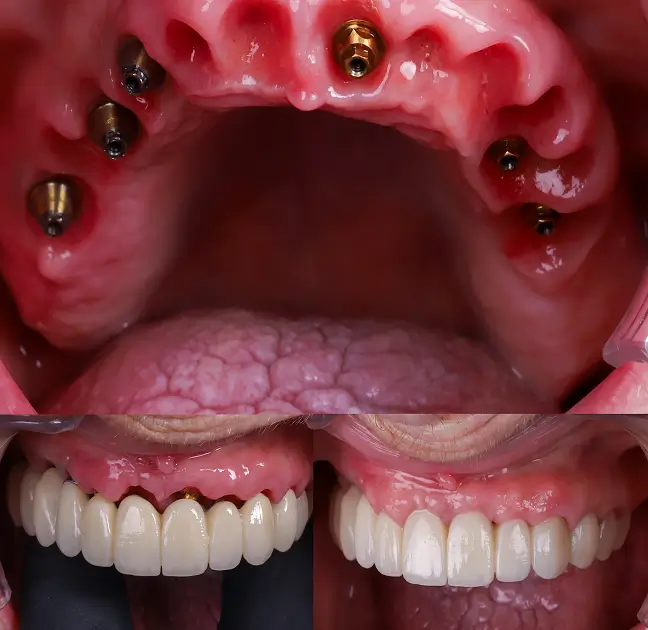
Transformation stories
Dental implant treatment
If you have ever been told your case has no solution, at MAG Dental Madrid we push the limits of dentistry to offer the answer you were looking for.

Frequently asked questions
The transnasal implant technique is an advanced surgical procedure indicated in severe cases of upper jaw bone loss. It allows placement of long implants anchored in deep basal bone near the nasal cavity, without bone grafts. Thanks to this high-stability anchorage, many cases allow immediate loading rehabilitation — fixed teeth the same day.
It is an implant placed through the mucosa without large surgical incisions, reducing inflammation and speeding recovery. They are mainly used in:
- Immediate loading implants
- Cortical anchorage implants (zygomatic, pterygoid, transnasal)
- Patients with little bone
- Complex implant surgery
In modern implantology, the transmucosal technique represents an evolution toward safer, faster, and more comfortable treatments while maintaining high long-term stability standards.
Side effects are usually mild and temporary: inflammation, discomfort, and slight bleeding. With transnasal implants they are often minimal due to the minimally invasive technique.
It is a long deep-anchorage implant fixed in bone structures near the nasal cavity to allow rehabilitation in patients without sufficient bone.
At MAG Dental Madrid, transnasal implants allow rehabilitation of patients with little maxillary bone by using stable anatomical zones, avoiding grafts and achieving fixed teeth with high precision.
Transnasal implants are placed without bone grafts through advanced digital planning. At MAG Dental Madrid we use minimally invasive techniques for safe, fast, and predictable results.
Transnasal implants are an alternative to zygomatic implants because they avoid more complex surgery. MAG Dental Madrid uses them in selected cases to achieve fixed rehabilitations with less invasiveness.
At MAG Dental Madrid in Madrid, we apply an advanced transnasal implant technique with 3D technology, allowing maximum precision and aesthetic results in patients with little maxillary bone.
See the transformation
Smile image changes are planned with care and nuance, for natural results that preserve overall balance and facial harmony.
View more storiesDiscover the difference
At MAG Dental Madrid we combine art, technology, and maximum precision to design unique, authentic, and fully personalized smiles.
Book your appointment